How are we each good? A physician coach debunks “better”

There we sat: 32 accomplished professionals from around the world.  Physicians, human resource professionals, career counselors, organizational development specialists, coaches – even 3 police officers.  Each day of our recent training in the Myers-Briggs personality inventory assessment ended with a quiz.  As the test papers were passed out, the tension in the air rose. It seems we are never too old to be nervous about taking a test.

What is that about?

Screen Shot 2015-02-01 at 9.59.13 AM

Through our home life, schooling, sports, admissions tests, and other experiences, we are constantly compared to those around us.  We define “good” by the degree to which we are better than others.  We are taught we must perform at a higher level than others, or bad things will happen to us and better things will happen to them.  (Interestingly, data shows that we are happier when bad things happen to everyone than when good things happen to us while better things happen to others.)  The concept that we are all right just the way we are is not part of our culture.

I struggled with measuring myself by my “betterness” in my first position as a physician.  As a general internist in a large, multi-specialty practice, I knew that down the hall were physicians who knew more and could better manage each of my patients’ medical conditions.  The cardiologist knew more about their heart failure, the pulmonologist more about their COPD, and the rheumatologist more about their lupus.  I wondered how I, in good conscience, could evaluate and provide care for any of my patients.  Wouldn’t they be better off seeing a variety of better-than-me doctors?

It reminded me of watching our daughter play softball as a freshman in high school. Three years younger than her teammates, she lacked the strength and experience that would make her a good hitter – but she had a strong throwing arm.  In her first game, she threw a runner out at home, from her position in center field.  This petite, young girl had a skill that was useful to the team.  The Myers-Briggs assessment clearly shows that each personality type provides an important orientation, skillset and approach to the work we do with others.  For my patients, I realized that they benefitted from the trusting relationship and broad overview I provided, which they might not have received from a compendium of specialists.

Tests are often invoked as “motivation” – our fear of falling behind or being embarrassed motivates us to study and learn.  In fact, research clearly shows that “intrinsic” motivation, the desire to succeed for reasons of intellectual interest, achieving mastery, or the attainment of a personal goal, is far more effective and trustworthy than extrinsic rewards.   (https://www.youtube.com/watch?v=u6XAPnuFjJc)  The feeling of “flow” when we strive to improve for intrinsic reasons is one of the most natural “highs.” Being better than ourself is a more effective motivator than being better than others.

We each have skills, perspectives, experience and personality traits that are important in our work, our families, and our relationships.  So perhaps we can stop asking ourselves if we are “better than” others and instead ask:

What do I bring to this situation that is valuable?  

Where might my particular talents and abilities be useful?  

What could I do to bring more of who I am to all the areas of my life?


Posted in physician coach, physician coaching, physician communication, physician fulfillment, physician work life balance, work life balance | Tagged , , , , , , , | Leave a comment

Speaking up – an important service to society in the eyes of a physician coach

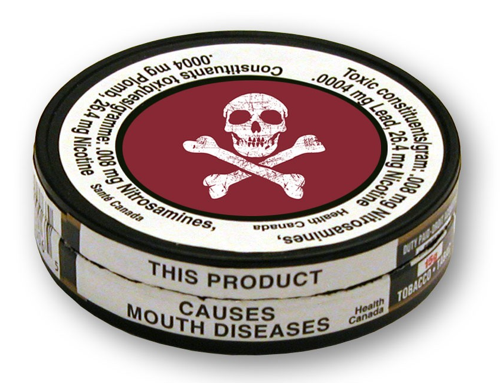
On a recent trip, I volunteered to help with physicals for some aspiring baseball players. Part of the evaluation was asking each person if he used smokeless tobacco, an unfortunately common habit among baseball players. Surprisingly, a good number acknowledged they did. Looking at these young men, with their whole lives ahead of them, I couldn’t keep Screen Shot 2015-01-15 at 9.18.13 AMeither my maternal or professional inclinations quiet. “Do you know you can get cancer from using smokeless tobacco?” I asked them. Many didn’t realize this was a possible consequence. “If you get cancer, the surgeons may need to cut parts of your face away,” I continued. As some of the players listened, it was clear that nothing would change. If they were teenagers, they probably would have rolled their eyes at that point. But some of the men looked at me with sincerity through very wide eyes and thanked me for telling them this. Whether it was news or not, it appeared they got the message.  Some of them seemed surprised that someone cared so much.

When our children were younger, we shared many suggestions with them regarding school, friends, and life. Sometimes they would listen. At other times they ignored what we had to say. And then there were the times they would return from a friend’s home excited about what the friend’s parent had told them – which happened to be exactly what we had suggested a few weeks earlier. Maybe it was easier to accept the idea from someone other than their own parent, or perhaps our comment introduced the idea and the friend’s parent repeated it when our child was more ready to hear it.

As healthcare workers, we have an opportunity and a responsibility to advocate for good habits among our patients. We can and should let our patients know when we feel their behavior is compromising their health and what they might do instead. While it usually takes more than one explanation to make most patients change their behavior, each voice adds another reason why the person should at least consider making the change. It’s easy to become discouraged when we already feel we don’t have enough time with patients or when our advice isn’t heeded.  I recall one patient who repeatedly declined my treatment recommendations.  At each visit, he would ask, “How long do I have to keep ignoring your advice?”  With other patients, their habits might be causing poor health but they refuse to change.  An old acquaintance who was morbidly obese asked for a recommendation for a new doctor.  “And I don’t want anyone who will tell me to lose weight!” she demanded.  For these patients, we need to find a nonjudgmental way of approaching them, their health and their resistance, usually after we have established a relationship and shown that we are truly concerned for their welfare.  Whatever it takes, it’s worth the effort.  We don’t want to allow this important role to be lost as we struggle with shorter patient visits and “meaningful use” requirements. Patients should see our profession as a source of knowledge and encouragement that can lead to better health. We should always be a strong voice fighting for our patients, sometimes even against themselves.

It remains to be seen whether any of the ball players will stop using smokeless tobacco. But I’m happy that I added my voice in taking a stand for their health. There’s a sense of integrity in advocating for our patients’ best health and in being part of a profession that serves that function for each patient and for society. And just maybe, knowing that someone cared enough to educate and confront them will make the difference and help them make better health choices.

Posted in building relationship with patients, effective communication in healthcare, physician coach, physician coaching, physician communication | Tagged , , , , | 1 Comment

Looking back to move forward in an intentional way – how to jumpstart physician coaching for 2015

Wow – 2014 sure went by fast, don’t you think?

A wise, Native American Shaman once told me that her people believe time is actually speeding up.  Certainly, as the years go by, the time in front of us feels shorter than before and we often feel the need to make each year, month and day count more than when we were younger and they seemed unlimited.  So at the beginning of this new year, we might want to consider…what do we want 2015 to be like?  How can we make this Screen Shot 2015-01-05 at 6.06.12 PMyear joyful, fulfilling and satisfying?  While most of us have responsibilities and commitments that preclude spending the year in Tahiti (would that actually be as fulfilling as we dream it would?), we do have places in which we have more autonomy and control than we might think. Unfortunately, many of us fall into a sort of magical thinking – if I just want something enough, it will magically happen.  We also have a habit of focusing on our failures or shortcomings, which isn’t the most effective way to propel ourselves into planning for the future.  So let’s take a look at 2014 to see where we thrived and what helped us do that.

What did you do during the year that completely surprised you?  What did you learn about your character, needs, or strengths from this?

What was the biggest challenge you faced?  What strengths of yours helped you face it?

In what area(s) of your life did you really make progress?  Why is this important to you?

What are you most grateful for?

What were the most fun times you had?

Now, with this information in hand, let’s imagine what we want for the coming year.

In what ways do you want your life to be the same at the end of 2015?  What do you need to do to assure that?  How will you make that happen?

In what ways do you want your life to be different?  What needs to change in order for that to happen?  Who can help you with that?  What strengths of yours can you draw upon?

While it’s easy to get bogged down by responsibilities and commitments, not to mention the many potholes and obstacles that unexpectedly appear in our lives, we can take hold of our life and make it ours through a process of reflection, intention and action.  So here’s my request: find an hour in the next week to sit down with your partner, family, friends and your calendar. Schedule those things that will help you begin to move into a joyful and fulfilling 2015.  This single small action will jumpstart your year.

Will you do that for yourself?


Posted in mindfulness, physician coach, physician coaching, physician fulfillment, physician work life balance, work life balance | Tagged , , , , , | Leave a comment

Open Book Medicine – a physician coach recommends curiosity

Today was one of those days when I knew why I went into medicine.  Among my new patients were two with complicated medical histories.  One was treated by a physician and improved.  But a second  physician emphatically told her she should never have had the treatment.  She worried she had made a poor decision that might affect her long term health.  In fact, the treatment was appropriate.  The second physician was simply uninformed, and rather than admitting he didn’t have experience in this area, or becoming curious about why the treatment was done, he assumed that his superficial knowledge was all there was to know.  It felt good to put her mind at ease and explain why the treatment was helpful.

The second patient continued to have pain in her leg after treatment. Her physician told her that nothing more was wrong with her and she was “fine.”   It was easy to see from her physical exam that she wasn’t “fine,” and an ultrasound confirmed an easily fixable problem.  When we aren’t successful in alleviating a patient’s pain or improving their condition, it’s sometimes easier for us to declare that there is nothing more to be done, rather than admitting that we might not have the answer.

We spend countless hours trying to know – the symptoms of diseases, their natural history, treatments and their side effects. We spend hours practicing techniques so we succeed.  But no matter how much effort we expend, there will always be things we don’t know and treatments that don’t work as expected.  How can we reconcile this with our desire to be of help to our patients?

When I told the second patient I reviewed her records and read some literature on her condition, tears came to her eyes.  “You read my records?” she asked.  “That really means a lot to me.”  While most patients want the very best results, they also understand that doctors cannot know everything.  In her recent New York Times editorial, Danielle Ofri, MD, PhD, an internist at Bellevue Hospital in New York City, addresses this fact.  She argues that recertification exams, which require us to memorize rarely used details, are a waste of a doctor’s time.  Instead, she suggests that exams be taken the way that medicine is practiced – open book.  Calling a colleague, reading an article or checking a textbook serve to fill in information we don’t have at our fingertips.  Using these resources is an effective and reasonable way to practice medicine.  My patient understood that I didn’t know everything about her and appreciated that I tried to learned more.  She wasn’t deterred when I admitted there were things I didn’t understand.  What she wanted was for me to acknowledge her pain, to care and to put forth effort on her behalf.  When we do that, we build rapport, attend to our patients’ needs, and acquire more knowledge as we go.  I’m with Danielle Ofri –  the practice of medicine should be open book, fueled by curiosity, and we can feel just fine about that.


Posted in building relationship with patients, effective communication in healthcare, honesty in medical care, physician coach, physician coaching, physician communication, physician fulfillment | Tagged , , , , , , , | Leave a comment

Being a rose seed: a physician coach looks at growth with anticipation and trust

It’s sometimes hard to answer the question, “What kind of doctor are you?”  I resist the temptation to answer, “a good one, I hope.”  Instead, I explain that I care for patients with vein disorders but am also a physician coach, working with doctors who wish to be happier or more effective in their lives and practices.  And, I teach first and second year medical students.  “What do you teach them?” is usually the next question.  That’s also difficult to answer.  I teach about communication, ethics, the doctor-patient relationship, the interaction of culture and medical care, healthcare systems – lots of things.  Almost as valuable, I teach how to remain sane and get through medical school.  While there are many challenging situations in life, medical school is definitely the most demanding one that most students have faced. Even to my current group of students who have overcome significant obstacles in their lives, the enormous amount of information they are expected to master in a very short time, the long hours, constant insecurity, and lack of sufficient feedback feels daunting.  And then add two more complicating factors – the realization of the grave consequences if they do not become competent, and the fact that most medical students tend to be perfectionistic and have extremely high standards for themselves.  When students don’t meet their expectations, even during a practice session, they begin to wonder if they will ever be successful.  I know I’ve felt that way many times.

For many years during my training, I could not remember to consider a blood clot as a possible diagnosis for a patient with calf pain.  Each time I forgot to include it in my list, I became irritated with myself.  A dear friend had a simple answer when I would share my frustrations.  I would exclaim,  “how much longer am I going to keep doing this?” and she would shrug her shoulders and reply, “until you don’t.”  One day, when a patient had pain in his calf, it occurred to me that it could be a blood clot. It was as simple as that.  It’s ironic that I now treat patients with blood clots, so it’s a diagnosis that immediately pops into my head.  None of my frustration with myself nor any of the insults I tossed around in my head did much to help me remember.  I just had to keep trying to remember until I did.

Screen Shot 2014-12-04 at 12.45.04 AMIn The Inner Game of Tennis, Timothy Gallwey offers a metaphor that can help us have the patience and trust we need as we try to learn and improve. “When we plant a rose seed in the earth, we notice that it is small, but we do not criticize it as “rootless and stemless.” We treat it as a seed, giving it the water and nourishment required of a seed. When it first shoots up out of the earth, we don’t condemn it as immature and underdeveloped; nor do we criticize the buds for not being open when they appear. We stand in wonder at the process taking place and give the plant the care it needs at each stage of its development. The rose is a rose from the time it is a seed to the time it dies. Within it, at all times, it contains its whole potential. It seems to be constantly in the process of change; yet at each state, at each moment, it is perfectly all right as it is.”

One of the many things I love about coaching and teaching is helping each person I work with to see themselves as that rose – perhaps not as fully blossomed as they wish they were, but with all the potential to be so if they continue to seek, learn, practice and grow.  In what parts of your life are you a rose seed, or perhaps an early shoot or bud?  Can you look at your process with the anticipation that you might feel when planting a seed?  What do you need to help you blossom fully?

Posted in physician coach, physician coaching, physician fulfillment, work life balance | Tagged , , , , , , , | 1 Comment

What’s still here? A Physician Coach’s Perspective

Several years ago, on a beautiful and sunny day in Mammoth, I was skiing with a friend.  Gone were our days racing down the black diamonds; we now cruised the blue, intermediate runs.  Wistfully, we acknowledged that we had changed.  We had lost Screen Shot 2014-11-21 at 12.58.55 AMsomething through the years.  Our joints were less forgiving and our bones more fragile; the risks of falling had become greater.  The thrill of speeding down the mountain had been replaced by caution and we felt sad about our loss.

In a recent medical school class, we discussed our experiences of grief and loss.  We each experience many losses, and so do our patients.  In fact, sometimes it feels as if much of medical care involves dealing with loss of one sort or another.  Until we are comfortable with our own grief, it’s difficult to witness and be present for our patients when they feel this deep emotion.  So in this class, we share our stories in order to learn from and come to terms with our feelings.  I was struck by one very insightful student who shared her own perspective of loss. As her grandmother developed increasingly severe dementia, the student focused only on what was no longer there. Early on, while grandma remembered who she was, the student was frustrated by the repeated questions and inability to remember her answers. Later, although they could still carry on a meaningful conversation, she felt hurt that grandma could no longer remember who she was. In the latter stages, she was saddened that grandma was no longer able to converse, although they could still sit and hold hands. In each stage, she focused only on what was gone – and not on what was present. How different could the experience have felt, she wondered, if she were able to accept that something had been lost, but still appreciate what remained?

Losses are usually painful because of the joy we once felt.  If the ability, freedom or relationship weren’t satisfying or important to us, it wouldn’t feel so painful to lose it.  And yet, there are times when we feel an even greater loss because we didn’t allow ourselves to feel the joy.  Those are the most difficult losses of all, because we are left with unresolvable remorse and without the warm memories that might sustain us through our grief.

After my mother died, I could not recall what she was like before she became ill.  The sadness and anxiety of her last months eclipsed any happy memories.  So as my father was dying, I took note of several happy times with him.  Brief, loving interactions, moments of closeness – I engraved them in my memory.  When I miss my father, I can instantly transport myself back to those wonderful memories and it’s as if he is here again.  As a physician coach, I frequently stop my clients as they want to rush through those precious moments of their lives – stay for a a minute more, I ask.  What’s here to appreciate or learn about you, your work, your life?

With the holidays approaching and the blizzards in the east, ski season is upon us again.  While black diamonds belong to the past and my days on the mountain have shortened to a few hours each, I intend to marvel at the exquisite vistas from the top of the mountain,  enjoy the crisp air rushing by my cheeks as I cruise down those blue runs, and laugh with friends over a glass of wine at the end of each day.  There’s always something here to appreciate.

So I wonder, what is here that you want to appreciate today?


Posted in physician coach, physician coaching, physician communication, physician fulfillment, physician work life balance, work life balance | Tagged , , , , , | 1 Comment

It’s Time to Show Up – a physician coach’s perspective

A friend of mine was chastised through her childhood for being too enthusiastic – “people aren’t like that,” she was told.  Instead, she was encouraged to “tone it down,” which apparently made those around her feel more comfortable.  Another friend is committed to thinking creatively about how best to educate children and has come up with a host of great ideas to do just that.  She reports that people have repeatedly backed away, saying she is “just too much.”

Mary at TP ReserveFortunately, both of these people didn’t give up on their special gifts and perspectives and instead found environments and people that value who they are.  I can tell you they both make a huge difference in my life. Taking a walk with my enthusiastic friend is always a treat.  An avid photographer, she stops the strangers we pass and offers to take their photo.  She engages them in conversations about their home and their experience of hiking in the park she loves.  Her enthusiasm is contagious, and it’s not long before I’m smiling or laughing – and meeting new people myself.  With her book, Living With Enthusiasm, and the programs she presents around the country, she helps people experience less stress and more life.  What an impact her enthusiasm makes!  My brilliant friend the educator continues her quest to train teachers who engage in authentic ways with their students.  She challenges everyone to be the best they can be.  Her vision is to create an online school attended by children from around the world, as she knows that international participation will enrich the educational experience and reduce conflict in the world by getting people from different cultures to work together from an early age.  Rather than “too much,” I believe the world doesn’t have enough of what she offers!  They both inspire me to think big and to realize that I can make a difference too.  I’m so glad these two friends didn’t allow their vision and special qualities to be quashed by the naysayers in their lives.

What aspects of YOU have been unwelcome in your family?  Workplace?  Organizations?

What do you know about the value of those parts of yourself?  Why are they important to you, to how you live your life, and how might they help the world?

At a recent meeting of my professional organization, I was asked what was responsible for our group’s success.  We formed in 1985 and have grown to be the largest, most dynamic, and most progressive organization of its kind.  Recalling our development, each president brought his or her own special interests and personality to the organization.  Our first president was relaxed and welcomed everyone to contribute whatever they wanted to.  We moved forward quickly, thanks to several people with a variety of talents.  Our second president was European and forged a strong connection between our fledgling American organization and the more experienced physicians in Europe, who generously traveled to the US to teach us.  Our third president was a strong leader with experience in other medical organizations.  He created a committee structure that encouraged greater participation and organization of our activities.  Without the unique contributions of each of these and our succeeding presidents, we would not be the group we are today.

As a physician coach, I ask my clients to consider their many roles in life.  Then, we look at what their strengths and talents are.  Once you have done this exercise, imagine how you can better bring those aspects of yourself into those roles.  Each of us is crucial to our families, our professions, our country and the world.  It’s time for all of us to enthusiastically bring all of who we are – especially what’s unique or special – to our interactions and activities.  Our relationships will be more authentic, our organizations will be stronger, and the world will be better because of it.


Posted in first impressions, honesty in medical care, mindfulness, physician coach, physician coaching, physician communication, physician fulfillment, physician work life balance, work life balance | Tagged , , , , , | Leave a comment

Our perfect patients: how physicians can mold our practice to optimize everyone’s satisfaction

An internist recently shared a story about an elderly couple – both were her patients.  One day, the woman remarked, “I love you, because you tell me what you think.”  The doctor was flattered that her style was appreciated.  She felt that she was being the good Screen Shot 2014-11-02 at 10.46.28 PMdoctor she had wanted to become.  Then, the woman continued: “But my husband, he hates you because you tell him what you think.”  Does this belong in the “you can please some of the people some of the time” category?

Along those lines, there is another great story. After drinking together for the evening, one man said to the other, “If everyone were like me, everyone would want to be with my wife!”  The other man retorted, “If everyone were like me, no one would want to be with your wife!”

We each have a unique blend of styles, mannerisms, ways of communicating and priorities.  This makes us attractive to different friends, partners and even patients.  And yet, as healthcare providers, we are expected to see all comers – to care for everyone who walks into our office.  But does that mean we should?  Can we really satisfy all of them?

For many years, I had limited hours in my practice, as I was involved in many additional activities during the day.  I recall a patient who called to schedule a consultation and was rude to our receptionist, insisting that he be seen earlier than the next available appointment. I contemplated acquiescing and offering him an earlier appointment.  Then, I realized that we were just not a good fit.  I called and discussed the situation with him, honestly explaining that I wasn’t in the office everyday and suggesting that being a patient in our office would be a frustrating experience for him.  Instead, I recommended that he see another physician.  I’m sure it saved us a lot of discord.

For a variety of reasons, many of us feel obliged to accept everyone who makes an appointment into our practice.  Sometimes it’s pressure from our institution; at other times, it’s pressure from ourselves to have a successful practice.  Although it’s important to learn to communicate with a variety of people, there are just some people who we will never work well with.  Just as with any relationship, it’s wise to set up some ground rules.  We can discuss with our patients how we want to interact with each other, what our expectations are, and what the consequences will be if those expectations aren’t met.  What happens when patients repeatedly come late or cancel appointments?  If they don’t follow the recommendations that you, together, have agreed upon?  If they are rude to your staff? How do your patients want you to discuss their test results, their prognosis, and possible treatments?  What are you willing to agree to?  Personal phone calls to relay lab results?  Round the clock availability? Multiple phone calls/emails between visits?

There are many variables in practicing medicine, and all too often, we fail to take the time to discover what would work best for us and to communicate that clearly to our patients. It’s difficult for sure to tell a patient that we aren’t the best doctor for him or her.  But when we do, the patients we keep are happier and more satisfied.  And that translates into a less stressful and more enjoyable practice for us.

Posted in building relationship with patients, effective communication in healthcare, first impressions, honesty in medical care, physician coach, physician coaching, physician communication, physician fulfillment, physician work life balance, work life balance | Tagged , , , , , | Leave a comment

Physics yesterday – a physician coach declutters

We are moving – again.  As a friend pointed out, it gives us the opportunity to clear out more things that we no longer use. Our problem is that we are so emotionally tied to many of those outdated things that it’s hard to let go.  It reminds me of the story told by another friend, whose late husband was the editor of the magazine Physics Today. When my friend attempted to throw out old issues of the magazine, her husband objected vehemently. “Oh, no!  You can’t throw those out.  Those are Physics Today!” he exclaimed.  “No,” she replied.  “Those are Physics Yesterday!”  

In The Happiness Project, Gretchen Rubin describes her year of trying to become happier.  Each month, she focused on a different aspect of life in order to systematically define what makes a person (or at least one person) happy.  Interestingly, she began by cleaning out her closets.  Her theory was that we each have so much “stuff” cluttering up our lives that it creates a feeling of chaos, disorder, and overwhelm.  She intentionally left one shelf in each closet empty, to let her psyche feel a sense of  spaciousness, to indicate she had room to spare and room to grow.

Gretchen also realized that not only was her home cluttered, her mind was cluttered.  So she made  a list of all those things that stay on her “to do” list but never seem to get done.  She eliminated all those that seemed unrealistic or unnecessary and then scheduled time to do those that felt truly important or deserving.

Jeff's shoeIt’s always easier to look at what others can do differently.  My husband should get rid of his old journals.  My kids should take their memorabilia to their own homes.  Being a firm believer in the idea that the only person we can change is ourselves, I looked over the garage, still full of unpacked stuff from our last move, trying to find things to give away or throw out.  As my eyes drifted over the scene of boxes, athletic equipment, and various unrelated items, they came upon our son’s old tennis shoe.  One of the first shoes he had ever worn.  Since our son is 26, there is no chance it will ever have a use – except to serve as a sweet reminder of that darling little toddler.  I remembered a brilliant idea that someone shared before our last move – to take a photo of each item whose memory we wanted to preserve, but which had no further usefulness.  Click – the shoe is now solidly tucked away on my computer, easily accessible whenever I want to see it and reminisce about those early childhood days.  I can’t say it didn’t feel sad to toss it into the trash.  But I did it.  One less item cluttering up our lives.

What “yesterdays” can you let go of?  What reminders do you want to keep – as memories, photos, or scanned documents?  When can you spend a few hours actually doing those things perennially on your “to do” list,  getting them off  your list and out of your mind?  What will it feel like to have more space in your life?

Posted in mindfulness, physician coach, physician coaching, physician communication, physician fulfillment, work life balance | Tagged , , , , | 1 Comment

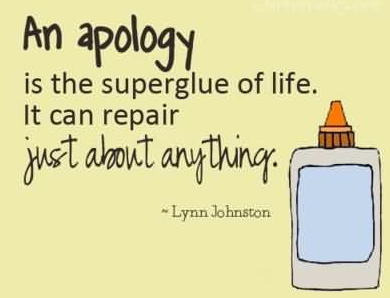
The Magic of an Apology – a physician coach’s perspective

Yesterday, I cleared my calendar for the long-awaited delivery of a new dishwasher.  Arriving early so I wouldn’t miss the delivery hours, I imagined having a dishwasher that would work well, with a black face to match all the other appliances.  The sales person in the store spent a lot of time with us, choosing just the right model and color, and seemed quite proficient in executing the order. The delivery men removed the old, nonfunctional dishwasher and brought in the new one.  Unfortunately, it had a bright, white face. Definitely not what we ordered.

What ensued was a series of phone calls to the central calling center of the company. You know how that goes.  “Push one if…”  25 minutes later, I was speaking with Denise, a real human being, who spent another five minutes finding, and then reading off the order – which I had in my hands.  Then she tried to match the numbers on the order to the model, which the delivery man had already done.  Clearly, she had no idea what to do about the situation, but didn’t know how to say that. I suggested that if she couldn’t help, perhaps I could speak with her supervisor.  While I waited for her to find out how to connect me, I mentioned that, when a company has made an error, the customer appreciates an apology.

Screen Shot 2014-10-18 at 3.08.29 PM

In my medical career, I have run late many times.  For several years, I was so over-booked that my patients were genuinely surprised when they were called in to the exam room on time.  One patient became somewhat annoyed when we ran on time, as she said: “When I come here, I look forward to having some time to read the magazines in your waiting room!”  Other patients were clearly angry, and several expressed, “My time is just as important as your time.” Early in my career, assuming my patients knew I was working as hard as I could, I felt they didn’t need an apology. It wasn’t that I was slacking off or wasting time – I was taking good care of people and that is why I ran late.  They, too, would get all the time they needed.
I was wrong.

When we commit to doing something that involves others, whether it’s placing an order for a specific item or making an appointment for medical care, we expect the other person to hold up their end of the agreement.  We expect them to pay for the item and be ready for its delivery, or arrive for their appointment at a specific time.  When we don’t honor our end of the agreement, we inconvenience them – and we risk losing our credibility, their respect, and their willingness to trust us again.  It is true that sometimes, we cannot honor our commitment.  An apology tells the other person that we appreciate that they held up their end of the bargain and that we wish we had been able to hold up our end as well. It is a simple and powerful way of acknowledging that we have let them down, inconvenienced them, and that we are sorry about that. It says, “I care about you and about our relationship.”

Nowadays, I always apologize when I enter an exam room after the patient has waited.  It is a simple, heartfelt sentence that creates partnership and rapport, and puts us on a path together toward understanding and solving their problem.

When I suggested to Denise that an apology might be appreciated, she enthusiastically said, “I’m really sorry!”  I definitely felt better.

Posted in building relationship with patients, effective communication in healthcare, first impressions, honesty in medical care, physician coach, physician coaching, physician communication | Tagged , , , , , , , , | 2 Comments